



Comprehensive Pre-Storm Roof Preparation & Active Indoor Leak Management Protocol for Central Texas Homeowners
by Hunter Maloy
Hydrodynamic Stress on Central Texas Roofing Systems
Central Texas atmospheric patterns are defined by sudden, severe convective shifts where long periods of intense sun and thermal heat give way to heavy downpours. When stalled low-pressure systems discharge rain across Travis and Williamson counties, residential roof assemblies experience high hydrodynamic loading. Rainwater cascades across roof slopes at high velocity, penetrating microscopic sealant gaps, aged underlayment, and flashings lifted by previous wind events. Proactive preparation and immediate indoor leak containment are vital to preventing structural wood rot, sheetrock destruction, and internal mold growth. Prosperity Roofing & Exteriors relies on 16 years of local repair experience across Austin, Cedar Park, Leander, and Georgetown to deliver clear, actionable protection protocols.
Essential Pre-Storm Roof Maintenance Checks
Preventing water intrusion begins with verifying critical exterior seals before heavy precipitation starts:
- Seamless Gutter Maintenance: Gutters and downspouts form your roof’s first line of drainage defense. When clogged with leaf litter, oak debris, or shed shingle granules, rainwater backs up along the eave. Trapped water climbs over the fascia board, seeping behind the drip edge to saturate roof decking and rafter tails. Clearing gutters and extending downspouts at least 3 feet from your foundation preserves structural integrity.
- Plumbing Vent Pipe Boot Inspection: Roof penetrations account for most sudden indoor leaks during storms. Specialized neoprene pipe boots seal plumbing vents. Under Central Texas UV exposure, neoprene boots dry, crack, and split. Rain runs straight down the pipe into attic space, creating immediate drywall ceiling stains. Replacing cracked boots prior to torrential rain eliminates this risk.
- Wind-Creased Shingles: Strong pre-storm wind gusts break factory adhesive seals on asphalt shingles. When wind lifts a shingle tab, it bends the inner fiberglass matting, creating a horizontal crease line. Creased shingles lose structural stability and waterproof capability, leaving underlayment vulnerable to wind-driven rain.
Emergency Indoor Leak Control Protocol
When unexpected weather breaches the roof envelope during a storm, fast interior action drastically reduces restoration costs:
- Containment: Place deep plastic buckets or storage totes directly beneath active drips. Surround the base with thick towels to catch water splatter.
- Property Protection: Move furniture, rugs, and electronics away from the drip zone or cover them with plastic sheeting.
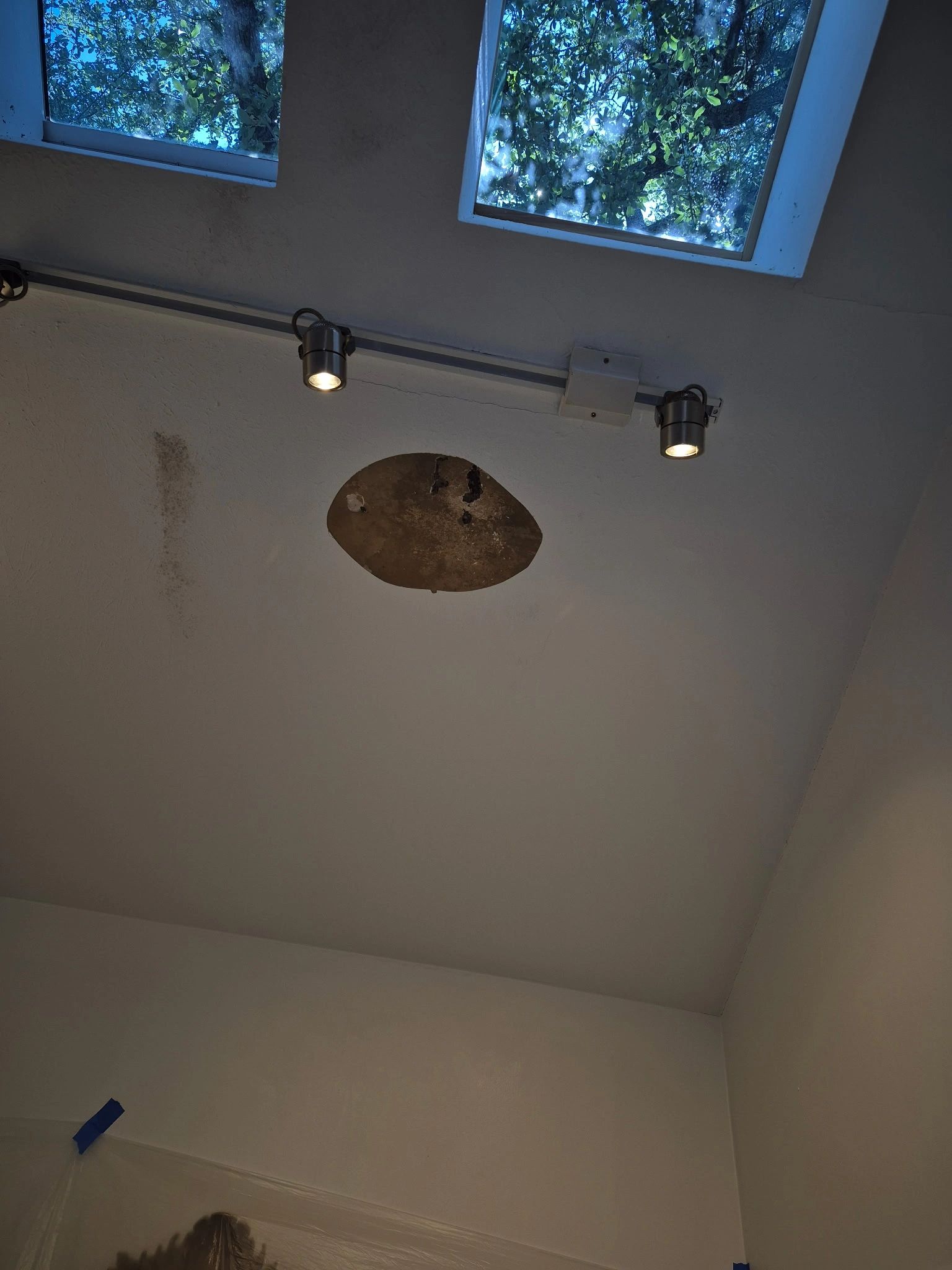
- Relieve Drywall Hydraulic Pressure: Water entering the attic pooling on ceiling sheetrock creates a sagging water blister. To prevent a widespread ceiling collapse, locate the center of the sagging blister and carefully puncture a small hole using a screwdriver or nail. This channels water cleanly into your bucket, preserving surrounding sheetrock and structural framing.
- Photo Documentation: Take clear photos and video of active water entry to support future insurance claims.
- Request Professional Repair Dispatch: Contact a local contractor to arrange rapid tarping and diagnostic inspection.
Professional Restoration & Digital Transparency
Homeowners should never climb onto a wet or slippery roof during a rainstorm. Prosperity Roofing & Exteriors dispatches experienced Area Managers within 24 to 48 hours to apply temporary emergency tarps or execute permanent repairs. Every inspection is powered by CompanyCam, providing high-resolution, date-stamped photo reports within 24 hours. Minor repairs (such as pipe boot replacements or flashing resealing) typically range from $350 to $800, while larger valley or structural repairs range from $1,000 to $2,500.
Protect your home today by calling Prosperity Roofing & Exteriors at (512) 810-1747 or scheduling service online, click here.
