


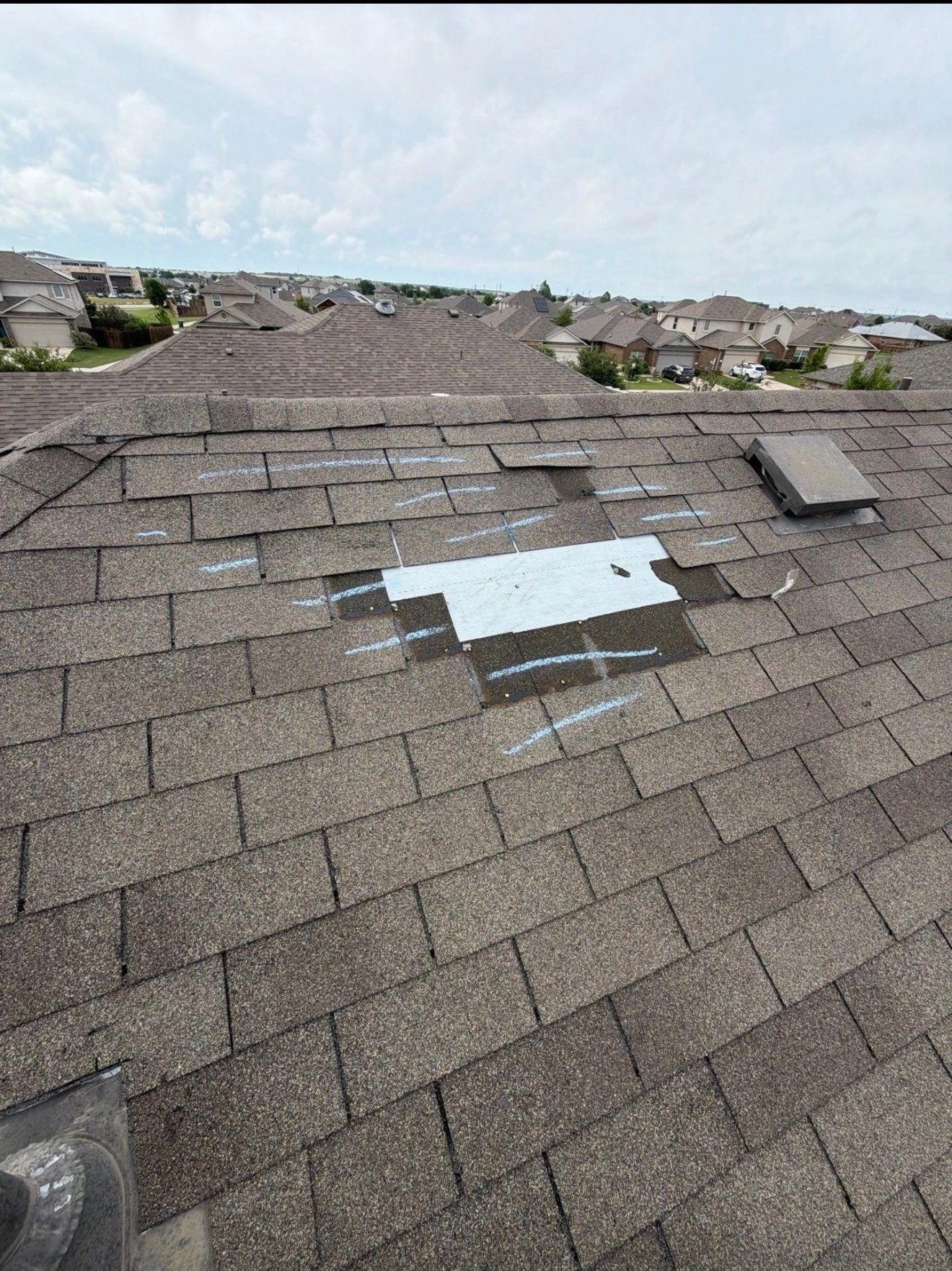

Short answer: To fix a roof leak, first control the water inside your home, then find where it is getting in, and then decide whether it is a small repair or a job for a roofer. Most leaks start at flashing, pipe boots, valleys, or damaged shingles, not in the middle of the roof. A temporary patch can protect your home for a few days, but a lasting fix means repairing the spot where water gets in.
Step 1: Control the Water Inside
Before you think about the roof, limit the damage indoors. This is the part of fixing a roof leak that every homeowner can do safely.
- Catch the drip. Put a bucket under the leak and lay towels around it. Move furniture, rugs, and electronics out of the way.
- Relieve a bulging ceiling. If the drywall is sagging with water, poke a small hole at the lowest point with a screwdriver and let it drain into a bucket. This keeps the ceiling from coming down all at once.
- Stay clear of electricity. If water is near a light fixture, outlet, or panel, turn off power to that area at the breaker.
- Take photos. Photograph the stain, the drip, and any damaged belongings before you clean up. You will want these if you file an insurance claim.

Step 2: Find Where the Roof Leak Is Coming From
Water rarely drips straight down from the hole. It runs along rafters and decking first, so the stain on your ceiling can be several feet from the entry point. However, you can usually narrow it down without getting on the roof.
- Check the attic. With a flashlight, look above the stain for wet insulation, dark streaks on the wood, or daylight coming through. Follow the wet trail uphill to its highest point.
- Look at what is nearby. Most leaks are within a few feet of something that passes through the roof: a plumbing vent, chimney, skylight, or exhaust fan.
- Inspect from the ground. Use binoculars or your phone camera to look for missing, lifted, or cracked shingles and bent or rusted flashing.
- Note when it leaks. A leak that shows up only in heavy or wind-driven rain points to flashing, valleys, or lifted shingles. Our guide on why a roof leaks only in heavy rain covers those causes.
Step 3: Make a Temporary Fix for the Roof Leak
A temporary fix buys you time until a proper repair. Only work on the roof if it is dry, the pitch is low, and you are comfortable on a ladder. Never go up during a storm, in high wind, or after dark. If any of that applies, stay inside and call for emergency roof leak repair instead.
- Tarp the area. Cover the damaged section with a heavy tarp that extends at least a few feet past it on every side and over the ridge if you can. Secure the edges with boards so wind cannot lift it.
- Seal a small gap. Roofing cement or sealant can close a small crack around flashing or a pipe boot for a short time. Apply it to a clean, dry surface.
- Patch from the attic. If you can reach the underside of the leak, a piece of plywood or a bucket placed under it will keep water off the ceiling until help arrives.
Keep any receipts for tarps and materials. If the damage is covered, your insurance company may reimburse reasonable costs to prevent further damage.
Step 4: The Permanent Repair
The lasting fix depends on what failed. These are the most common roof leak repairs on Central Texas homes.
- Cracked pipe boot: the rubber seal around a plumbing vent dries out in the Texas sun. The boot is replaced and the surrounding shingles are resealed.
- Failed flashing: loose or corroded metal around a chimney, wall, or skylight is removed and replaced, then sealed.
- Missing or damaged shingles: the damaged shingles are removed, the underlayment is checked, and matching shingles are installed.
- Leaking valley: the valley is opened up, the lining is replaced, and the shingles are reinstalled.
- Nail pops: raised nails are removed, the hole is sealed, and the shingle is refastened.
- Rotted decking: if water has softened the wood under the shingles, that section of decking is replaced before the roof is closed back up.
When to Call a Roofer
Some leaks are simple. Others only look simple. Call a roofer if any of these apply:
- You cannot find the source, or the leak comes back after a patch.
- The roof is steep, two stories, or wet.
- The leak is at a chimney, skylight, valley, or wall, where flashing has to be rebuilt.
- The ceiling is sagging, or you see mold or soft wood in the attic.
- The leak started after hail or high wind, because storm damage may be covered by insurance and should be documented before it is repaired.
How Much Does It Cost to Fix a Roof Leak?
At Prosperity Roofing & Exteriors, roof leak repairs start at $250. Larger repairs, such as rebuilding flashing or replacing a section of decking, typically run $1,000 to $2,500. Costs vary for every job, because the price depends on what failed, how much of the roof is affected, and the roofing material. We give you an itemized estimate after a free inspection.
How We Find and Fix Roof Leaks
Prosperity Roofing & Exteriors is a family-owned roofing company in North Austin. We trace each leak from the ceiling stain back to where the water gets in, and we document what we find with photos so you can see the problem for yourself. Repairs come with a 1-year warranty. Alternatively, you can choose Defend 365, our 7-year preventative maintenance plan.
Have a roof leak? Call 512-810-1747 or request a free inspection. We repair roof leaks across Central Texas, including roof repair in Austin, Georgetown, Round Rock, and Leander.
Water coming in right now? See our emergency roof leak repair service for same-day tarping and repair.
FAQs
Can I fix a roof leak myself?
You can safely control the water inside, find the general area of the leak, and tarp a low, dry roof. Repairs that involve flashing, valleys, steep roofs, or rotted wood are better left to a roofer, because a patch in the wrong place can trap water and make the damage worse.
How do I stop a roof leak until a roofer arrives?
Catch the water in a bucket, drain any bulge in the ceiling through a small hole, and move belongings away. If the roof is dry and safe to reach, cover the damaged area with a tarp secured by boards. If it is not safe, stay inside and call for emergency tarping.
What is the most common cause of a roof leak?
Most roof leaks start where something passes through or meets the roof: cracked pipe boots, worn flashing at chimneys and walls, and valleys. Missing or lifted shingles after wind and hail are the next most common cause.
Does homeowners insurance cover a roof leak?
It depends on the cause and your policy. Sudden damage from a storm, hail, or a fallen tree is often covered, while leaks from age or lack of maintenance usually are not. Take photos before any repair and check with your insurance agent about your coverage and deductible.
Is a small roof leak an emergency?
A slow drip is not usually an emergency, but it should not wait long. Even a small leak can soak insulation, rot decking, and lead to mold. If water is coming in steadily or the ceiling is sagging, treat it as an emergency.

Leave a Reply