


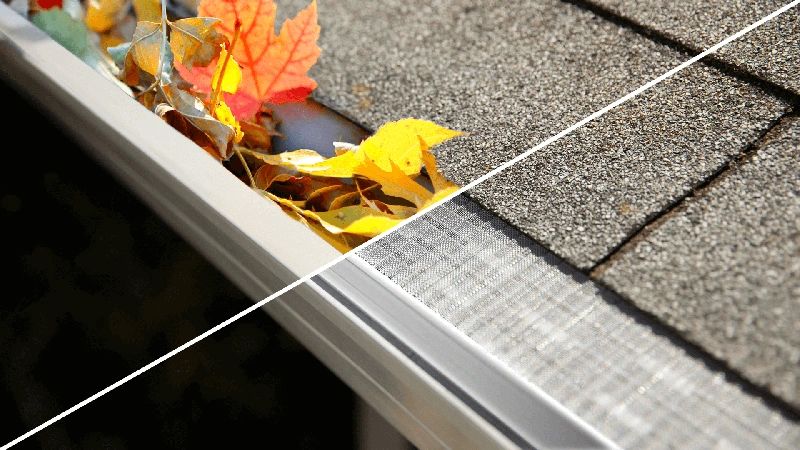

The Ultimate Central Texas Home Defense: Why Gutters and Micro-Mesh Gutter Guards Are Non-Negotiable
By: Hunter Maloy
When most Central Texas homeowners think about roof maintenance, their focus naturally gravitates upward toward shingle integrity, hail impact resistance, or thermal insulation. However, one of the most critical structural safeguards on any residential property isn’t sitting on the roof deck—it is attached directly to the fascia board.
Rain gutters are often viewed as a purely cosmetic trim piece or a minor convenience designed to keep water from dripping on your head at the front door. In reality, across Austin, Travis County, and Williamson County, a professionally engineered seamless gutter system is the first line of defense protecting your home’s single most expensive structural component: its foundation.
Between volatile climate swings, intense flash flooding, expand-and-contract clay soils, and dense, debris-heavy tree canopies, living in Central Texas presents a unique set of architectural challenges.
This comprehensive guide explores why gutters are essential for protecting home foundations in Central Texas, the hidden dangers of unmanaged rainwater, and why installing high-performance micro-mesh gutter guards is vital for properties with heavy tree cover.
1. The Central Texas Soil Crisis: Expansive Clay & Hydraulic Pressure
To understand why rain gutters are vital in Central Texas, you must look beneath your grass. The geographic region spanning Austin, Round Rock, Pflugerville, Cedar Park, and Liberty Hill sits atop vast expanses of expansive clay soil (often referred to as Blackland Prairie clay or Houston Black clay).
Expansive clay acts like a dense, natural sponge. It expands dramatically when saturated with water and shrinks significantly during hot, dry spells. This violent cycle of movement creates severe instability underneath concrete slab and pier-and-beam foundations:
- The Expansion Phase (Heavy Downpours): Central Texas is famous for long stretches of drought punctuated by sudden intense thunderstorms. When hundreds of gallons of concentrated rainwater pour off an unprotected roofline, the water drops directly onto the soil adjacent to your home’s concrete slab. The clay soil rapidly absorbs this moisture, swells, and exerts tremendous upward and inward pressure (hydrostatic pressure) against the foundation.
- The Contraction Phase (Texas Summer Heat): As 100°F summer days return, that over-saturated soil bakes and dries out. As it dries, the clay shrinks and pulls away from the concrete slab, creating void spaces underneath the foundation.
- Differential Settling: Because the corners and perimeter edges of an un-guttered home absorb disproportionate amounts of roof runoff compared to shaded or sheltered areas, the soil moves unevenly. Over time, this “differential movement” causes concrete slabs to crack, tilt, heave, or snap.
WITHOUT GUTTERS (The Destruction Cycle):
Roof Runoff ➔ Water Pools at Base ➔ Expansive Clay Swells ➔ Drought Shrinks Soil ➔ Voids Form ➔ Concrete Cracks/Settles

WITH SEAMLESS GUTTERS (The Defend Cycle):
Roof Runoff ➔ Caught at Eave ➔ Routed through Downspouts ➔ Discharged 5+ Feet Away ➔ Soil Moisture Stabilized
The Financial Contrast: Gutters vs. Foundation Repair
The cost of installing a custom, continuous seamless gutter system across a home is a fraction of the cost of structural foundation repair.
While a high-end seamless aluminum gutter package typically ranges from $1,200 to $3,500 depending on linear footage and downspout count, major foundation piering and slab leveling in Austin frequently costs between $8,000 and $25,000+, not including the subsequent interior repairs required for cracked drywall, warped doorframes, and ruined tile flooring.
2. Beyond the Slab: Additional Critical Benefits of Gutters in Central Texas
While foundation defense is the primary structural argument for gutters, channeling rainwater safely off your roofline yields a cascade of additional protective benefits across your entire property:
A. Stopping Landscape Washout and Topsoil Erosion
Homeowners across Central Texas invest thousands of dollars into custom landscaping, stone flowerbeds, organic topsoil, and decorative mulch. Without gutters, the straight “drip line” of your roof acts like a high-velocity water knife during heavy rain. A single severe storm can carve deep trenches around your home, strip away valuable topsoil, destroy plant root systems, and wash expensive mulch onto your driveway and sidewalk.
B. Eliminating Exterior Siding, Brick, and Paint Stains (“Back-Splash”)
When heavy water drops fall from a height of 10 to 20 feet and hit bare soil or flowerbeds, the impact blasts muddy water, fungal spores, and aggressive minerals back up onto your home’s lower walls. Over time, this persistent “back-splash” leads to:
- Permanent reddish-brown soil staining on white stone, limestone, or light brickwork.
- Peeling, blistering, or premature deterioration of exterior paint and wood trim.
- Dark mold, mildew, and algae growth along siding and stone foundations.
C. Protecting Wooden Fascia, Soffits, and Rafter Tails
Without gutters, rainwater overflowing or wrapping back around the edge of the roofline soaks directly into the wooden fascia boards, sub-fascia, and soffit vents. Continuous water exposure causes wood rot, attracts wood-boring pests (such as carpenter ants and termites), and weakens the structural mounting points along your roof edges.
D. Preventing Walkway, Patio, and Driveway Undermining
Concrete flatwork—including front entryways, stone walkways, rear covered patios, and concrete driveways—is easily damaged by unchanneled water runoff. Water falling off the roofline onto flatwork seeps into underlying dirt sub-bases, washing away supporting soil. Eventually, this leads to sunken concrete steps, cracked walkways, and hazardous tripping hazards directly outside your doors.
3. The Tree Canopy Conundrum: Why Central Texas Properties Suffer
Central Texas is celebrated for its lush, mature tree canopies. From majestic Live Oaks and Cedar Elms to Pecan trees, Mountain Junipers (Ashe Junipers), and Crepe Myrtles, local foliage adds immense aesthetic charm, shade, and property value.
However, for a home’s gutter system, these trees present a year-round operational challenge.
Many homeowners assume tree debris is strictly an autumn problem. In Central Texas, leaf and tree dropping is a 12-month cycle:
+-----------------------------------------------------------------------------------+
|                        CENTRAL TEXAS YEAR-ROUND TREE DEBRIS CYCLE                 |
+-------------------+---------------------------------------------------------------+
| SEASON            | FOLIAGE / DEBRIS TYPE                                         |
+-------------------+---------------------------------------------------------------+
| Spring (Mar-May)  | Live Oak Catkins (Tassels), Pollen Balls, Oak Leaves, Seed Pods|
| Summer (Jun-Aug)  | Pecan Stem Drops, Bark Strips, Windstorm Twig Breakage        |
| Fall (Sep-Nov)    | Pecan Leaves, Cedar Elm Leaves, Acorns, Shredded Bark         |
| Winter (Dec-Feb)  | Ashe Juniper (Cedar) Needles, Berry Drops, Evergreen Shedding  |
+-------------------+---------------------------------------------------------------+
When open gutters collect this dense, mixed debris, the consequences occur rapidly:
- The “Soggy Plug”: Fine debris like Live Oak catkins and small cedar needles collect inside gutter channels. When mixed with rainwater, they form a thick, dense paste that completely seals downspout openings.
- Heavy Standing Water: A single linear foot of gutter holding trapped water and soggy leaves weighs significantly more than a clean gutter. This extreme weight causes hanger brackets to pull loose, warping aluminum channels and causing gutters to sag away from the fascia board.
- Severe Overflow Direct to Foundation: Once a gutter is plugged, every gallon of rain streaming off your roof overflows right over the front and back lips—dumping hundreds of gallons of water directly onto your foundation, defeating the entire purpose of the system.
4. The Solution: Why Micro-Mesh Gutter Guards Are Essential for Wooded Lots
If your property features mature trees, standard open gutters will require manual cleaning 4 to 6 times per year to remain functional. Ladder-climbing carries inherent safety risks, and hiring professional cleaners multiple times a season quickly becomes expensive.
This is where installing a professional-grade Gutter Guard Protection System changes everything.
However, not all gutter guards are created equal. Understanding the difference between cheap big-box store designs and commercial-grade micro-mesh protection is crucial.
The Danger of Inferior Guard Designs on Texas Roofs
- Plastic/Vinyl Screen Covers: These degrade, warp, and crack under intense Texas sun and UV exposure. Furthermore, the large grid openings allow Live Oak catkins, pine needles, and acorn stems to drop right through, trapping debris underneath the guard where it is impossible to scoop out.
- Reverse-Curve / Solid Hood Covers: These rely on surface tension to channel water around a curved front lip while shedding leaves. However, during heavy downpours, high-velocity rainwater shoots right over the curved edge onto the ground. Additionally, sap from oak trees creates a sticky film on solid hoods that ruins surface tension, causing overflow.
- Foam or Brush Inserts: These act like sponges, absorbing dirt, sprouting organic seedlings, and trapping dark organic matter until the entire channel becomes a solid block of mud.
The Gold Standard: Medical-Grade Stainless Steel Micro-Mesh
For Central Texas properties, a surgical-grade 316 stainless steel micro-mesh system set in a heavy-duty extruded aluminum frame is the premier solution.
Here is why micro-mesh outperforms all other designs on wooded lots:
- Microscopic Pore Size: The stainless steel mesh screen features microscopic openings (often measured in microns). It is fine enough to block microscopic oak debris, evergreen needles, roof shingle granules, and even pine saplings, allowing ONLY pure liquid water into the gutter trough.
- Extreme Water-Handling Capacity: Engineered micro-mesh utilizes capillary action to pull heavy volumes of surface water straight down into the gutter, handling rainfall rates exceeding 20+ inches per hour—far beyond any historic Texas downpour.
- Self-Shedding Pitch: Installed at an optimal angle aligned with your roofline, micro-mesh allows dry leaves, oak catkins, and twigs to rest harmlessly on top until natural ambient winds blow them right off the roof.
- UV & Thermal Resistance: Unlike plastic, the extruded aluminum frame and stainless steel mesh will never warp, rust, rot, or sag under intense 100°F+ Central Texas summer conditions.
+-------------------------------------------------------------------------------------------------------+
|                                    GUTTER GUARD TECHNOLOGY COMPARISON                                 |
+---------------------------+------------------------+-------------------------------+------------------+
| GUARD TYPE                | BLOCKS SMALL DEBRIS?   | HANDLES HEAVY TEXAS RAIN?     | UV LONGEVITY     |
+---------------------------+------------------------+-------------------------------+------------------+
| Plastic Grid Screens      | NO (Passes through)    | Moderate                      | Poor (Warps)     |
| Foam / Sponge Inserts     | NO (Traps dirt inside) | Poor (Saturates/Clogs)        | Poor (Rots)      |
| Solid Reverse-Curve Hoods | NO (Sap ruins flow)    | Poor (Water sheets off edge)  | Moderate         |
| Stainless Steel Micro-Mesh| YES (Blocks all debris)| EXCELLENT (Capillary action)  | EXCELLENT (Metal)|
+---------------------------+------------------------+-------------------------------+------------------+
5. Seamless Gutters vs. Sectional Store-Bought Systems
If you are adding gutters to a home or replacing an aging, failing system, the manufacturing method matters just as much as the guard protection.
The Flaws of Sectional (Vinyl/Plastic) Gutters
Sold at big-box home improvement stores in pre-cut 10-foot lengths, sectional gutters are joined together using plastic connectors, caulking, or metal lap screws.
- Seam Failures: Every 10 feet creates a seam. As Texas ambient temperatures shift 40 degrees in a single day, the metal and plastic expand and contract, breaking down interior silicone sealants. Within 12 to 24 months, sectional systems begin leaking at dozens of connection joints.
- Interior Snags: Screws and overlapping seam edges inside the trough create friction points that catch passing leaves, accelerating clogs.
The Advantage of Custom-Engineered Seamless Aluminum
At Prosperity Roofing & Exteriors, we fabricate seamless aluminum gutters directly on-site at your home. Using a mobile roll-forming machine, single continuous metal runs are custom-measured and cut to match the exact dimensions of your roofline.
- Zero Mid-Run Seams: Continuous runs eliminate leak points along the length of your walls, keeping 100% of captured rainwater contained until it exits the downspout.
- Heavy-Duty Internal Hangers: Instead of cheap external spikes that pull out of fascia over time, seamless systems utilize heavy-duty, hidden internal screw hangers spaced at precise intervals for maximum weight capacity.
- Baked-On Factory Finishes: Seamless aluminum features heavy-gauge metal finished with factory enamel coatings that resist UV fading, chalking, and rust for decades.
6. Proper Downspout Placement & Discharge Strategy
An outstanding gutter channel is only as effective as its discharge plan. Capturing thousands of gallons of water from your roof is useless if your downspouts simply dump that concentrated volume directly at the base of your corner walls.
A professionally designed Central Texas drainage strategy includes:
- Adequate Downspout Capacity: Oversized 3×4-inch downspouts should be installed instead of standard 2×3-inch commercial sizes. Oversized downspouts move 50% more water volume and easily pass small residual debris without jamming.
- 5-Foot Minimum Perimeter Rule: Downspout elbow extensions must discharge water at least 5 feet away from the foundation edge onto sloped terrain.
- Underground Pop-Up Emitters & French Drains: On tight residential lots or low-sloped yards where surface water naturally pools, downspouts should tie directly into smooth-wall PVC underground drain pipes. These lines safely route storm runoff underground to pop-up emitter valves positioned far out in the lawn or toward street curbs.
- Splash Blocks & Catch Basins: Placing reinforced splash blocks or concrete catch basins beneath downspout exits prevents localized ground scouring and soil erosion.
7. A Proactive Exterior Checklist for Central Texas Homeowners
To ensure your home remains fully protected against foundation shifts and seasonal rain events, complete this simple exterior evaluation once per quarter:
- [ ] Inspect the Drip Line: Walk your home’s perimeter after a rainstorm. Look for erosion trenches, exposed dirt roots, or muddy backsplash on siding.
- [ ] Check Corner Downspouts: Ensure downspout extensions are attached securely and discharging water at least 5 feet away from your slab.
- [ ] Look for Fascia Gaps: Look up at your roofline. If you see daylight or dark moisture lines between the back of your gutter and the wooden fascia, the gutters are pulling loose or overflowing.
- [ ] Evaluate Tree Clearance: Trim overhanging Live Oak, Pecan, and Elm branches at least 6 feet away from your shingle surface to reduce leaf drops and squirrel roof access.
- [ ] Upgrade to Micro-Mesh: If you find yourself climbing ladders multiple times per year to clear soggy oak catkins or leaves, invest in a permanent stainless steel micro-mesh guard system.
Safeguard Your Home’s Foundation with Prosperity Roofing & Exteriors
Your home is your most valuable financial asset, and its concrete foundation relies on controlled, balanced soil moisture. Don’t allow unmanaged Texas rainstorms or clogged gutters to compromise your structural integrity.
Whether you need a full seamless gutter installation, oversized downspout routing, or premium stainless steel micro-mesh gutter guards to conquer heavy tree cover, Prosperity Roofing & Exteriors delivers engineered exterior solutions built specifically for Central Texas weather.
[Click Here to Schedule Your Free Gutter & Foundation Defense Inspection Today]
